Generative AI
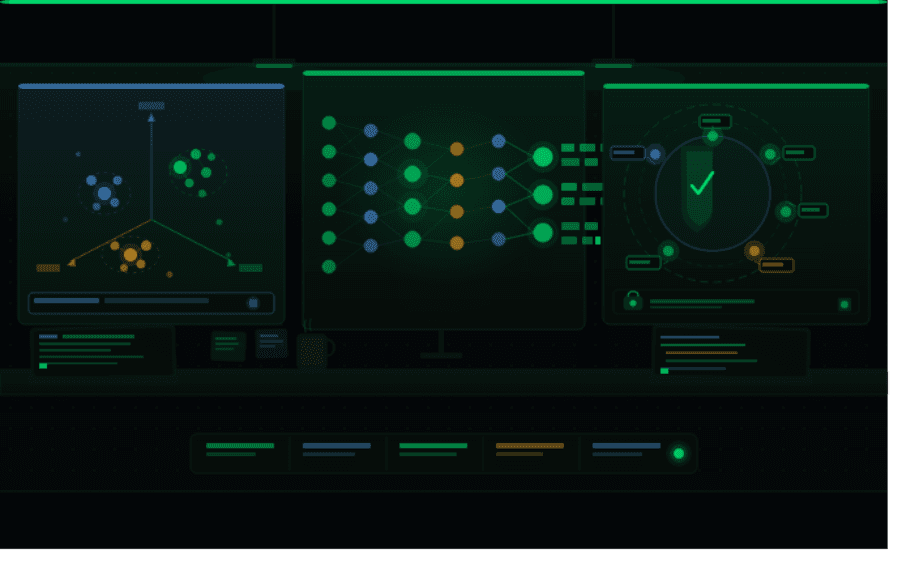
turntabl builds generative AI into existing workflows rather than around them, with evaluation and data lineage built in from the start. Our work includes a patent-pending tool that understands data in n-dimensional space, deployed with full regulatory awareness for secure, compliant use across production data environments.
Case Study: Generative AI for Safer Architecture Decisions
The Context
Our client is a large, highly regulated organization with complex technology platforms where architecture decisions must be clear, consistent, and auditable. As interest in Generative AI grew, the client wanted to explore how AI could support architects and engineers without compromising governance, trust, or control.
The Challenge
Architecture work had become increasingly time-consuming and inconsistent. ADRs were not always captured, diagrams drifted out of date, and translating between architecture models was manual and error-prone. At the same time, the client had real concerns about hallucinated outputs, lack of repeatability, and introducing AI in ways that bypassed existing controls.
Our Solution
We embedded Generative AI into existing architecture workflows in a controlled, dependable way. Rather than replacing established practice, we built on trusted foundations:
Stable foundations: Used an existing deterministic translation service to keep architecture diagrams and model translations repeatable
Workflow integration: Enabled engineers to draft and review ADRs with AI assistance, while automatically generating aligned diagrams
Reduced effort: Reviewed architecture in human-readable formats, generated documentation automatically, and analyzed repositories to infer structure
To support adoption, the core services were wrapped in Python and Java libraries so teams could use them directly in their own platforms and pipelines.
The Results
AI-assisted ADR authoring aligned to existing governance
Consistent, repeatable architecture diagrams
Less manual effort maintaining documentation
Greater confidence using AI in regulated settings
Clear separation between AI assistance and authoritative outputs
The Impact
The client was able to adopt Generative AI without introducing new risk. Instead of weakening architecture discipline, AI strengthened it by making it easier for teams to document decisions, maintain standards, and trust the results.
The organization now has stronger alignment between architecture and documentation, and a platform ready to evolve safely as AI capabilities mat